By: Autumn Lawrence (arlawrence@csuchico.edu) & Samantha Taylor (staylor2@csuchico.edu)
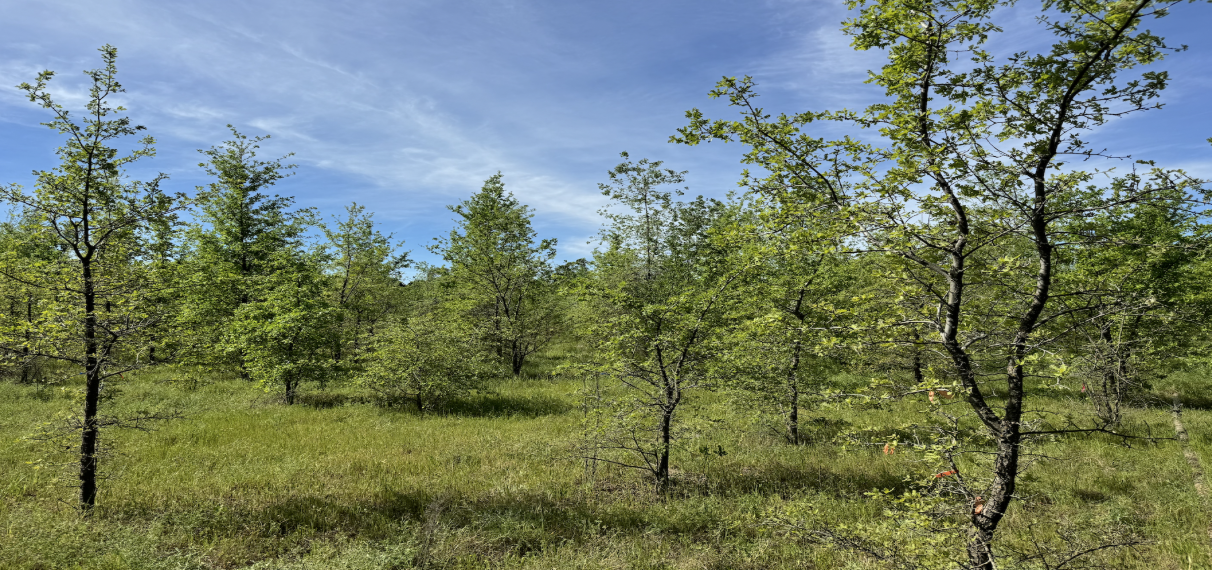
A warm spring day tends to bring people of all ages and backgrounds to the outdoor recreational spaces sprinkled across our serene city of Chico, California. One such space is the Chico Seed Orchard (CSO), a dedicated 209 acre “tree farm” that is open to the public with a variety of unique botanical areas, wildlife, and a one-mile self-guided nature trail that meanders through the area of the site. Many people use this space to disconnect from electronics and get fresh air. Depending on the time of day you may see a few runners out for a morning jog, a couple strolling with their kids and grandkids, a person walking their dog or teenagers from the high school hanging out on their free period. As they stroll through the orchard, they may be wondering, what are those crazy looking things growing from the trees? They almost resemble seeds but upon further inspection these growths are not seeds, but galls.
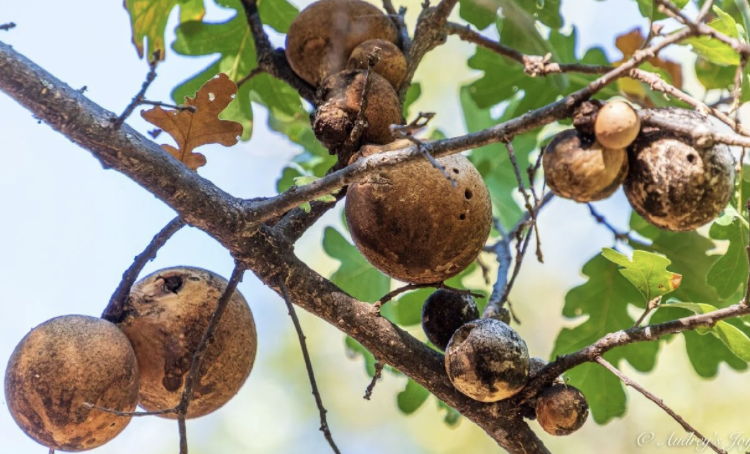
What are galls in the first place? These are growths that are induced by an organism on a host plant. Many different types of organisms can induce galls: insects (wasps and aphids), nematodes, mites, or even bacteria and fungi. Galls can take many different forms in varying sizes. Often to identify the inducing organism you look at the gall rather than the organism itself. The gall is hijacked plant tissue. Typically, they occur when the inducer secretes hormones or chemical signals as it bites into the host-plant. In response, both the plant’s cell size and number from that wound begins to multiply. Which results in a symmetrical growth on that section of the plant. This growth is utilized as a nutrient-rich microenvironment for the inducer to rear its young in. Acting as both protection and a nutrient source. In this case, the gall-inducer is a parasite that benefits more from the gall than its host-plant. Many gall-inducers are host-specific. The Valley Oak (Quercus lobata Née) is one such species that is susceptible to galls.
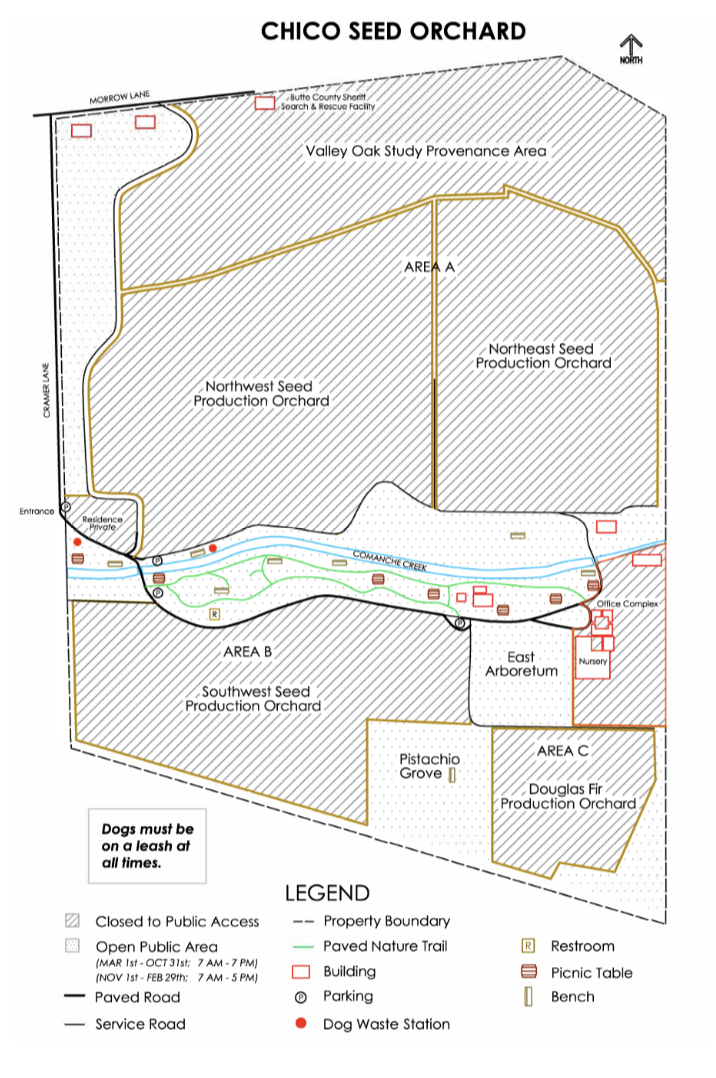
The CSO has three separate sites that grow Valley Oaks that were sourced from seeds from different locations all across California. Valley Oaks are a species that is endemic to California. With California’s mediterranean climate (wet mild winters and warm dry summers) it becomes a booming biodiversity hotspot. Subsequently producing many endemic species, species that are unique to only California. Prime example: the Valley Oak. It has evolved and adapted to only being able to thrive in Californian soils and weather conditions. This species of oak is characterized by its soft lobbed leaves and drooping branches. It is also a keystone species, often acting as an indicator of the surrounding environment’s conditions. Valley Oaks are very sensitive to disturbances( like climate changes or wildfires), which has made them the focus for many conservation and restoration projects. The CSO is one such organization. At the seed orchard, they grow not only just valley oaks but also other conifer species. Primarily, the trees grown at the orchard are sourced for their seeds for reforestation efforts across California. The United States Forestry Department (USFS) has used seeds for the efforts in forest fire recovery in national forests like Plumas, Lassen, and Mendocino. Additionally, CSO acts as a site for Common Garden Studies (CGS). CGS’s are used to compare different variables within a target species without competing influences such as different elevations or different climates. Essentially, growing the same species originating from different environments in a shared environment. This can be beneficial in determining what are influencing factors across a whole species rather than on an individual. Setting up standards that can be used in other experiments in a fairly simple way.
There is a lot that is still unknown about galls and their impacts on their host plant. However, previous studies have indicated that gall inducing insects seem to show a preference for choosing host trees with lower elevations as opposed to higher elevations. To further explore this possible relationship, we conducted a study using the CSO’s CGS since it provides the unique opportunity to explore maternal elevation as a possible factor as opposed to current elevation. Maternal elevation has been proven to have an impact on Valley Oak phenology, most notably, bud burst. Phenology, often referred to as “nature’s calendar”, refers to the study of recurring life cycle stages and how seasonal and climatic changes impact these different life stages. We know that Valley Oaks from lower elevations has a phenology cycle that occurs sooner than those from higher elevations. They “bud out” sooner than others from higher elevations. Thus, we postulate that gall inducers would be more abundant on trees that have resources and nutrients more readily available during the season. After collecting gall quantities on Valley Oaks by using random sampling techniques at the North Block of CSO, we looked at gall counts across an elevation gradient using a model built for messy, zero-heavy data.
Instead of lumping elevation into “low” and “high” categories, we kept it continuous to show the variation in the data we collected. A clear pattern jumped out: more galls at higher elevations. The increase is gradual, but over the full range it adds up to a noticeable difference.This is especially interesting because elevation is a stand-in for climate.
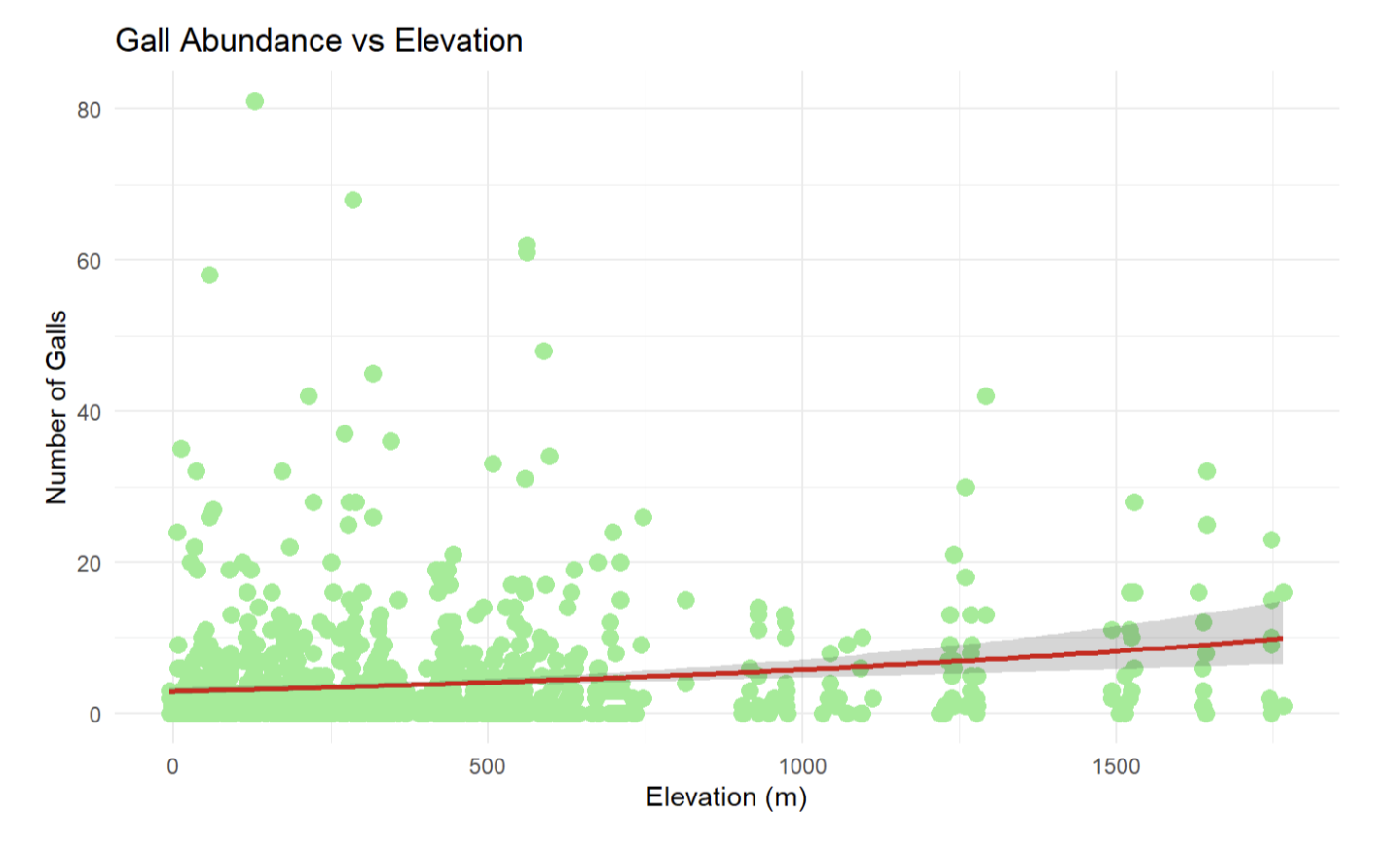
These results suggest that even subtle climate differences can ripple through ecosystems, influencing interactions like gall formation which hint at how those relationships might shift as climates continue to change. As we noted earlier, previous research states that gall forming insects prefer lower elevations but as those elevation levels come with warmer temperatures and less resource availability, gall-inducing insects seem to be moving to higher elevations in search of their preferred climate conditions that are no longer available in lower elevations.
This may seem like a lot. We went from asking what those not-seeds on trees are to exploring possible reasons behind these surprising results. You just essentially went through a crash-course of being an ecologist. To recap: those not-seeds you see are actually growths induced on trees by small organisms and used as incubators for their young. Valley Oaks are a species that can only thrive in California and are a host-species for these galls. There is an interest in Valley Oaks because they act as environmental indicators to disturbances. Places like CSO grow Valley Oaks for reforestation efforts as well as conduct CGSs to determine influencing factors in a shared environment. Phenology plays an important role in the physiology of the trees. Using all these concepts in addition to the experiment we personally conducted, we determined that there are more galls at higher elevations, contrary to previous studies.
Though, I think there is still one blaring question to ask: why should I care? Do galls and oaks even matter to me? Well, let's break it down. California has faced many disturbances, some of the biggest being climate changes and wildfires. Valley Oaks can be used by restoration and conservation efforts as reflection of these affected habitats. Agencies that go through the effort of seeding are going to want to use stock from healthy sources that can adapt to local conditions. There are still many knowledge gaps on galls, however we do know that they use their host’s biology for their advantage. Gall abundance may be a visual predictor of a tree’s health. Are the sourced trees producing enough resources to sustain insects and other organisms or are they struggling in this new environment? By studying patterns like gall abundance on the Valley Oaks, land managers can detect and determine stressors. Which allows them to evaluate their efforts. This can be especially critical to tracking bigger and more rapid environmental shifts like climate change. Understanding the relationship between such vastly different organisms allows us to comprehend intricacies of the environment around us and the roles that we play in it. Thus allowing us to decide the parts that we take action in.