Kaitlyn Weycker and Wren Szoboszlay
Contact: keweycker@csuchico.edu, gnmauro@csuchico.edu
Think about the last time you walked through a park or a forest. There may have been trees towering far above you, others freshly sprouted, stretching their still-growing branches towards the sky. You can remember a huge variety of plant species; different trees and flowers and bushes. Wouldn’t it be strange if instead, every tree was the same species and the same age? This is common in farmlands, not in natural environments, but this study takes place where those realms combine.
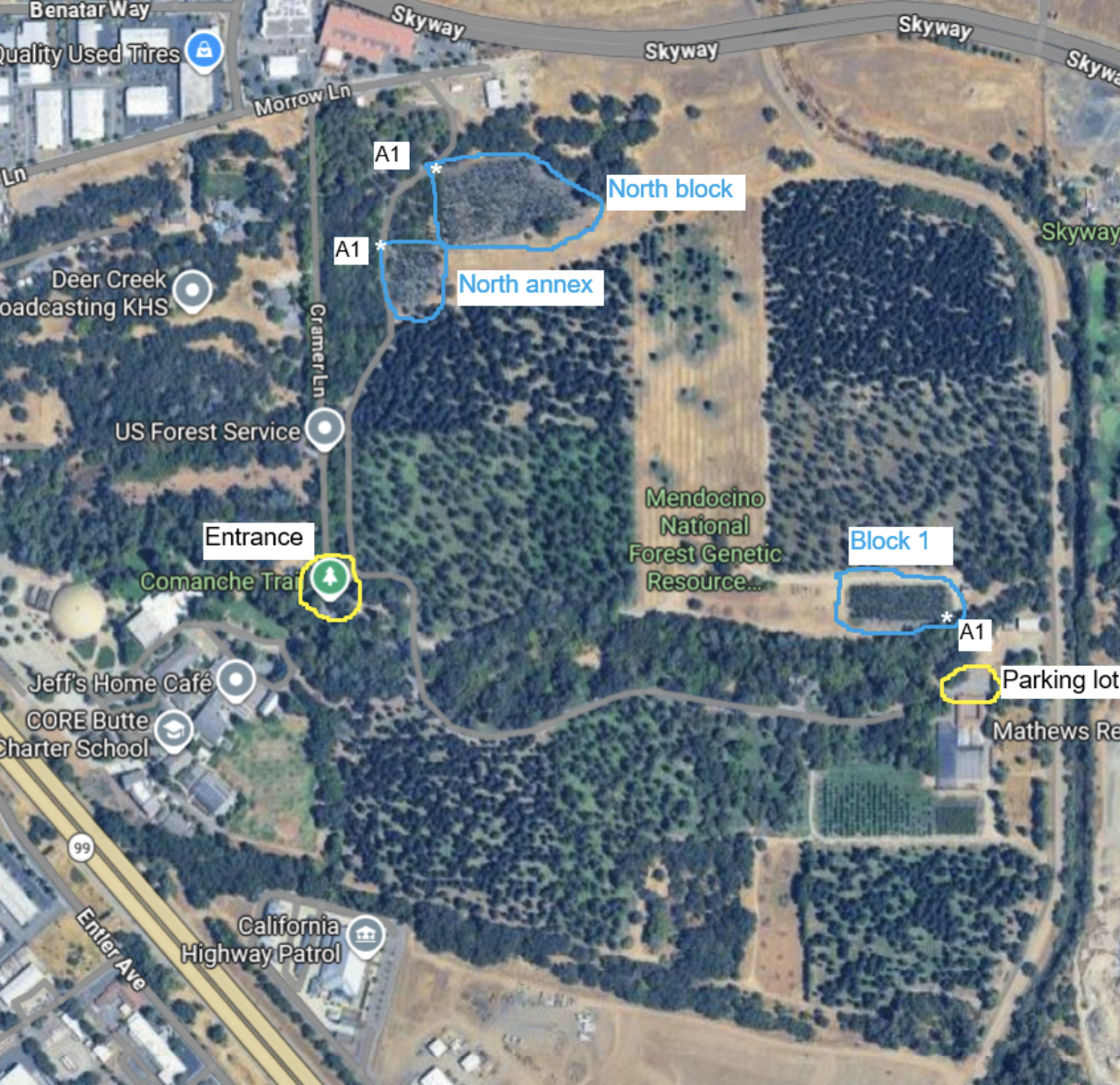
The Chico Seed Orchard, located in Chico, California, grows a variety of non-crop tree species for economic and scientific ends. One of the research projects on site analyzes a tree named the valley oak, which grows all over California in a wide variety of habitats, from the floors of our deserts to the reaches of our mountain ranges. Because it is an orchard, every oak tree at the CSO is the same age, but that doesn’t mean every plant has grown equally. Some trees tower over their relatives, some grow tall and thin, others spread wide like shrubs. How does this variety, in the absence of age differences, impact the animals that call valley oaks home? The North Block of the CSO provides the ideal location to answer this question.
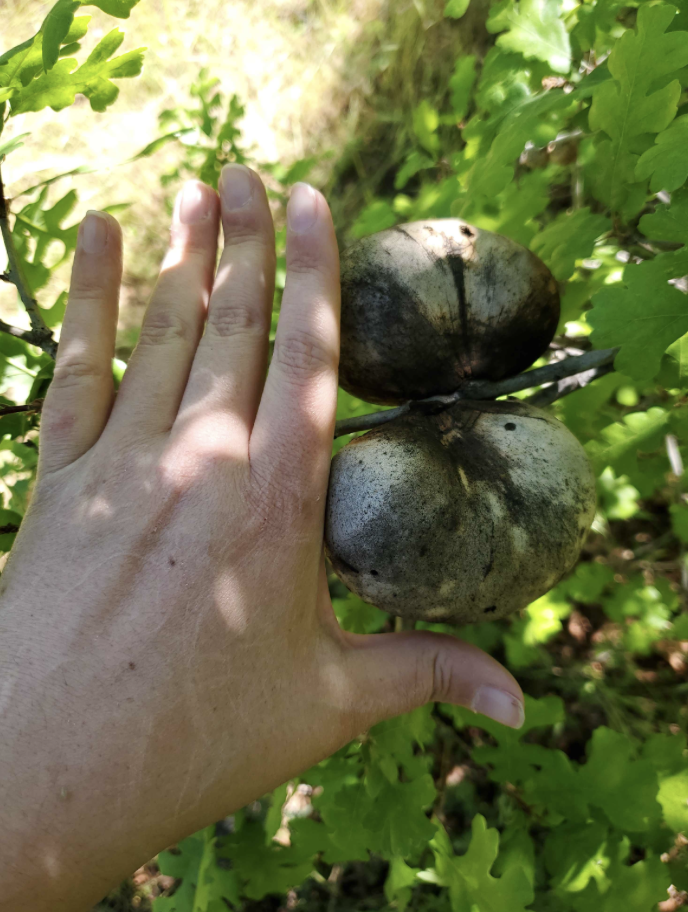
Probably the weirdest of residents are two species of wasps that lay their eggs inside of the stems of these oaks, creating lumpy growths called galls. These galls act as homes for the growing wasps, and the mother wasps are very particular about just which tree they will choose to lay their egg inside. The species of galling wasps found at the Chico Seed Orchard are Disholcaspis eldoradensis and Andricus quercuscalifornicus. The former is a local species of “honey dew wasp”, named for the sugary liquid their small rough-skinned galls produce. The latter, pictured to the right, is known as the California gall wasp which creates “oak apples”, large galls that superficially resemble their namesake fruit. Other species can hijack these houses for their own gain, creating a complex ecosystem within the palm of your hand.
In past studies, these species were found to prefer to lay their eggs inside large, young trees more than any others available. So, which trees do they prefer when they are all the same age? We chose to investigate whether the size of a tree, measured as the diameter of their trunk, influenced the amount of wasp galls that were present on that tree. We measured the trunks of 1,148 trees in the North Block and counted how many galls we saw within a square transect, and plotted the two against each other.
We went into the study believing that the largest trees would have the most galls, since they were growing more quickly and had more surface area for wasps to create galls. Instead we found…
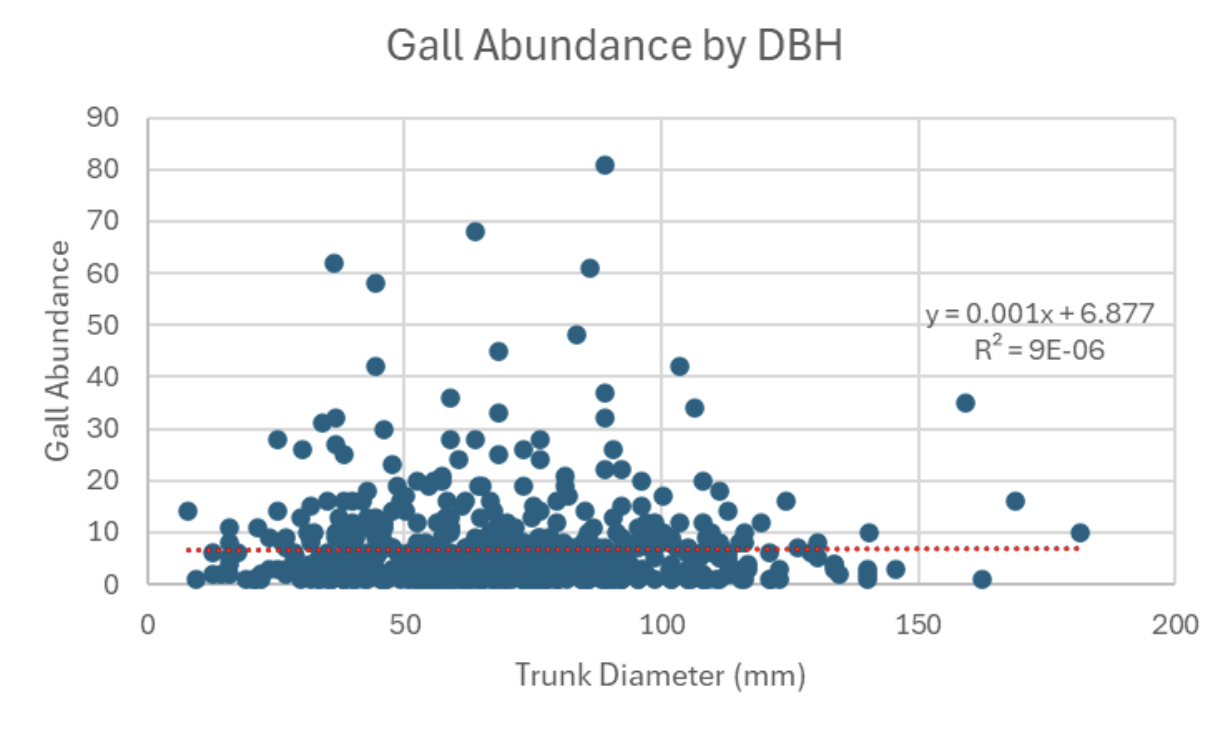
…that the wasps don’t seem to care! The trendline overlaying our scatterplot shows that trees of any trunk size are about equally likely to be selected by a mother wasp to lay their egg, which suggests that the wasps care more about other aspects of the tree than trunk size. For example, maybe the wasps prefer trees that grow their leaves earlier in the year? Or, they might like trees that already have other galls on them. Since these galls can become homes for more than just the species of wasp that created them, discovering just what makes a tree appealing can help conservation and rehabilitation efforts for a wide variety of species, including the valley oaks themselves. Future studies have a lot of avenues to explore!