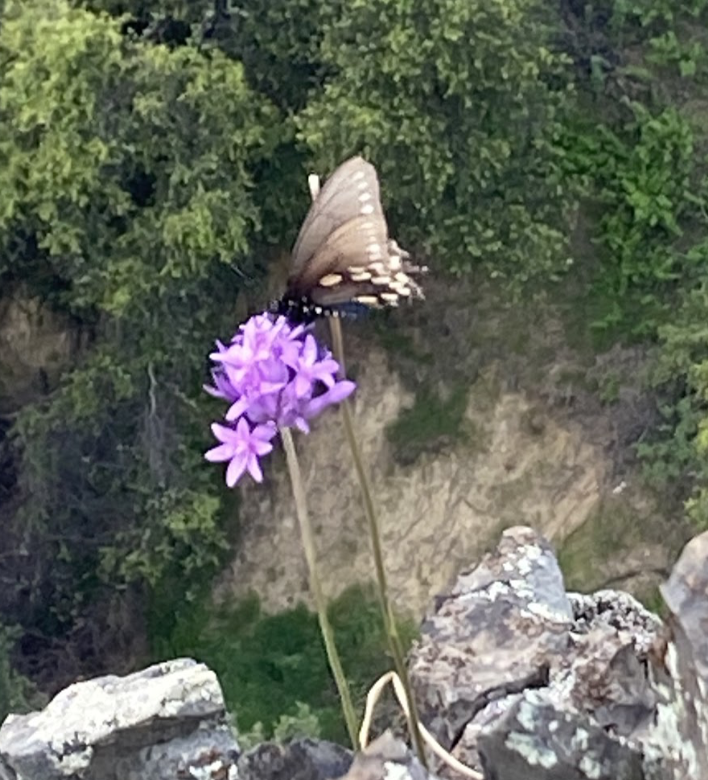
Heather Hardie and Ian Stevenson
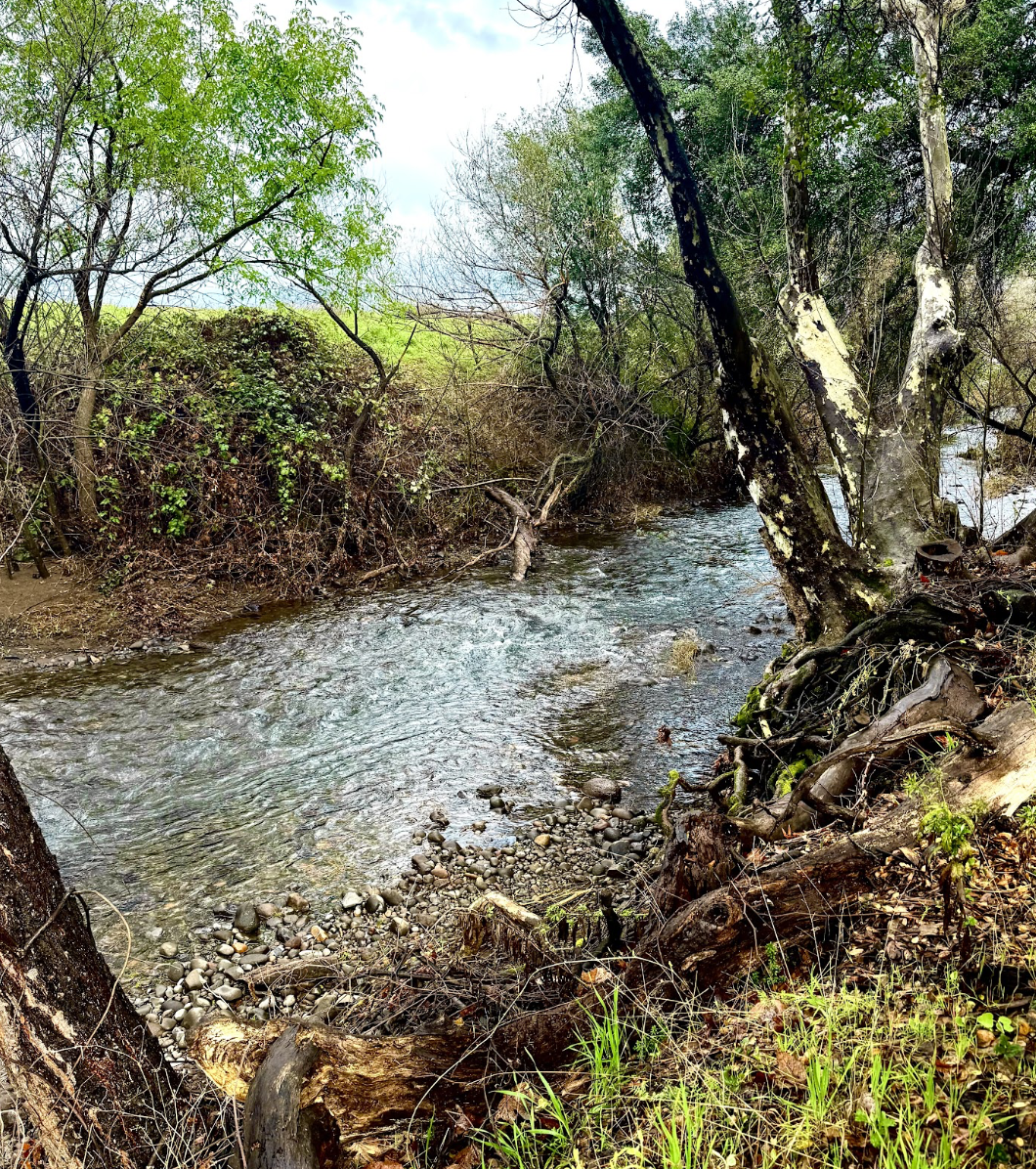
Insect populations are in worldwide decline and Chico’s role in protecting our local critters is more important now than ever. You may be thinking to yourself, “who cares about insects?” but you should care! Insects provide a large variety of both economic and ecosystem services which benefit you on a regular basis. Insect diversity is responsible for all sorts of things, including eating our unsightly messes (Who else will clean up the dog poop left on the side of the bike path?), pest control, pollinating our fruit and vegetable plants, and nutrient cycling! Here in Chico, we have unique habitats which can benefit and protect insect diversity by creating safe areas, or ‘refuge’ for insects amidst the urbanization of the city.
One potential location of refuge for insects includes Little Chico Creek, which is a steam system that runs down from Forest Ranch parallel to highway 32 and moves underground near Little Chico Creek Elementary School. Creeks like this one create a unique habitat type called a riparian corridor which is deeply diverse and rich with insect life. With insect diversity declining worldwide, insects can find refuge in less disturbed habitats such as Little Chico Creek. Little Chico Creek can act as a so-called “refugia”, which has been shown to protect insect diversity in otherwise inhospitable urban areas.
In order to take a closer look at the potential role of Little Chico Creek as a refugia for insects, we examined the impacts of urbanization on insect communities and diversity along the length of the creek. We chose three sites along the length of the creek with varying levels of urbanization, or human modification, in order to test whether our development had a sizable impact on the insect diversity in those areas. We determined that each site had differing amounts of urbanization, with our first site being surrounded by roads, walking trails, housing, schools, and businesses- which we used as our primary test site for urbanization. Our second site was off Picholine Way, where one side of the creek was moderately urbanized by suburban housing, while the adjacent bank was on untouched grasslands. This site was used as a “moderate” test site, seeing whether variance in urbanization had any impact on insect communities. Finally our last site was up Stilson Canyon road, where no urban construction had reached either side of the creek. This site acted as our control site, a neutral ground that we could use as a baseline for insect diversity along the creek.
At each site, we did a multi-part insect sampling process in order to collect an accurate sample of the terrestrial insect community at each site (exploring different niches and so on). We used aerial nets to catch butterflies out of the air, beat insects off of tree leaves and grass stems onto collection sheets, colorful traps to attract pollinators, and fermenting bait traps hung from trees to attract beetles and moths that love the smell of beer (Yes, it is true. Humans aren’t the only ones who like the smell of alcoholic beverages).
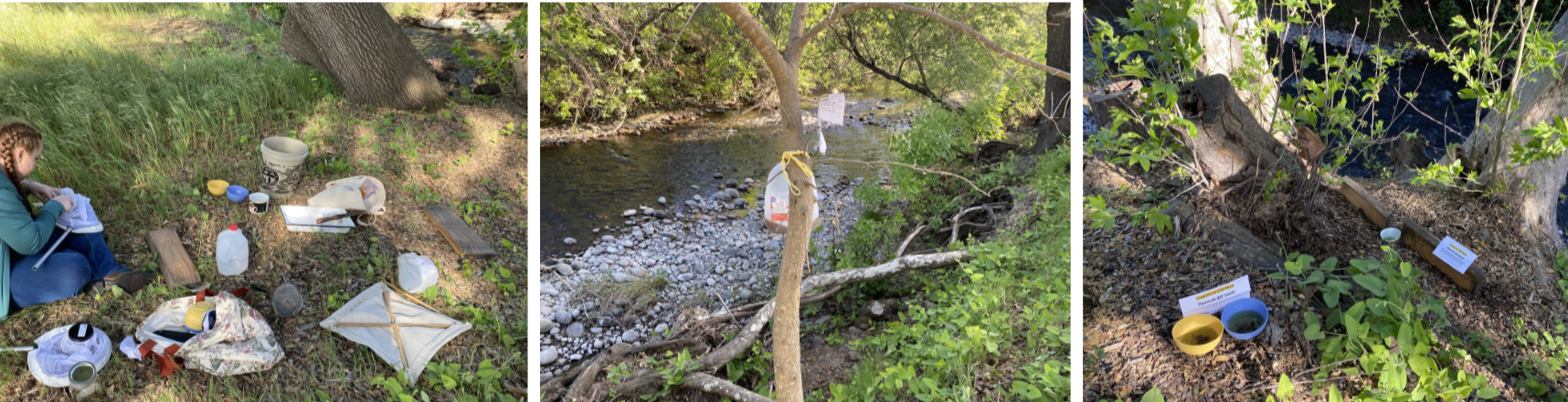
From our various traps and nets, we identified the insects collected at each site and recorded the number of different species (richness) found at each site as well as the amount of each species at each site (abundance). Then using all of the information we gathered, we compared the community composition and diversity between the three sites using several diversity indices and a Principal Coordinate Analysis (PCoA). We found that there were large differences in the community makeup between the three sites, with not very much similarity. We also found a pattern in the diversity indices that should be further explored by another project done with repeated sampling in order to determine statistical significance.
This project and studies like our project are more important today than ever before, especially within the context of Chico’s ongoing debate on our expansion into previously untouched ecosystems. Little Chico Creek is a central landmark flowing through areas that have recently been under intense public debate, including the controversial Valley’s Edge project and the recently finished Bruce Road Reconstruction project. In our desires to expand the reaches of our growing city, Chico has been slow to study how we already impact our local ecosystems and how expanding our urban spaces will have an impact on our wildlife. Insect communities worldwide are in decline due to human dominance over our ecosystems and it is no question that urbanization and urban sprawl plays a huge role in this widespread destruction. Our city should be cognizant of its role in this matter and we need to put in the effort to not contribute to this worldwide problem.
It is essential to study the impacts of our influences on the environment and work to minimize the unintended consequences of our growth. We can achieve this by prioritizing methods that help support biodiversity and insect community health, instead of mowing down the few spaces that these communities have left. Protecting riparian refugia is only the first step in supporting our local insect communities and the next steps that are led before us should focus on actualizing our support for biodiversity and ecosystem health.