Annabelle Hallman (amhallman@csuchico.edu)
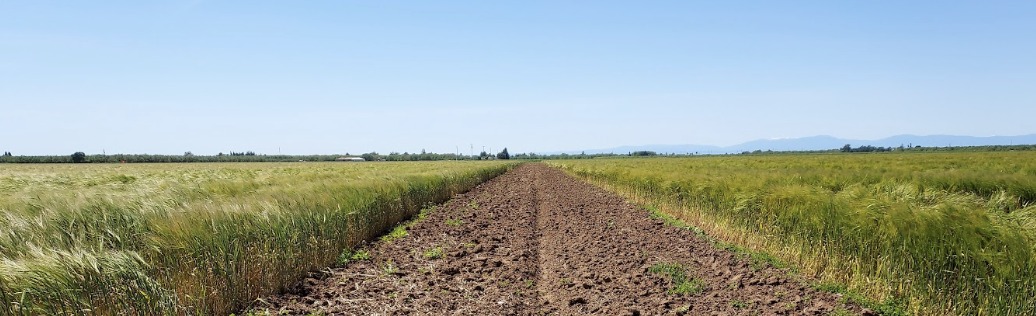
Do you know where your food comes from? Yeah, you might have picked it up from the grocery store, but what about before that? Was it grown in a greenhouse? How about the water that was used or the soil it was grown in? It turns out that soil, not just dirt, is really important when it comes to the quality of our food. To better understand how soil is treated by farmers, I did a little project involving two fields at California State University (CSU) Chico’s Farm.
CSU Chico Farm maintains two fields that have grown side-by-side for several years. One field utilizes regenerative agriculture practices, which is a holistic approach that promotes biodiversity and better soil health using methods such as crop rotation and cover cropping. The other field uses conventional or industrial farming techniques, which include using synthetic fertilizers and frequently tilling the soil. This can strip the soil of essential nutrients, exhaust the soil, and compact the soil, making it harder for things to grow.
We collected thirty samples of soil from each field, digging about seven inches into the ground with a hand-held auger. We also used a digital penetrometer to see how dense the soil was. The samples were weighed and then dried in an oven at 105℃ for 24 hours before they were weighed again. We used these numbers in the Gravimetric equation to calculate what percentage of water each soil type retained. We found that not only did the regenerative field retain water better, but it also had lower soil density! That means water stays in the soil longer for plants to utilize, and essential gases can also enter the soil more easily.
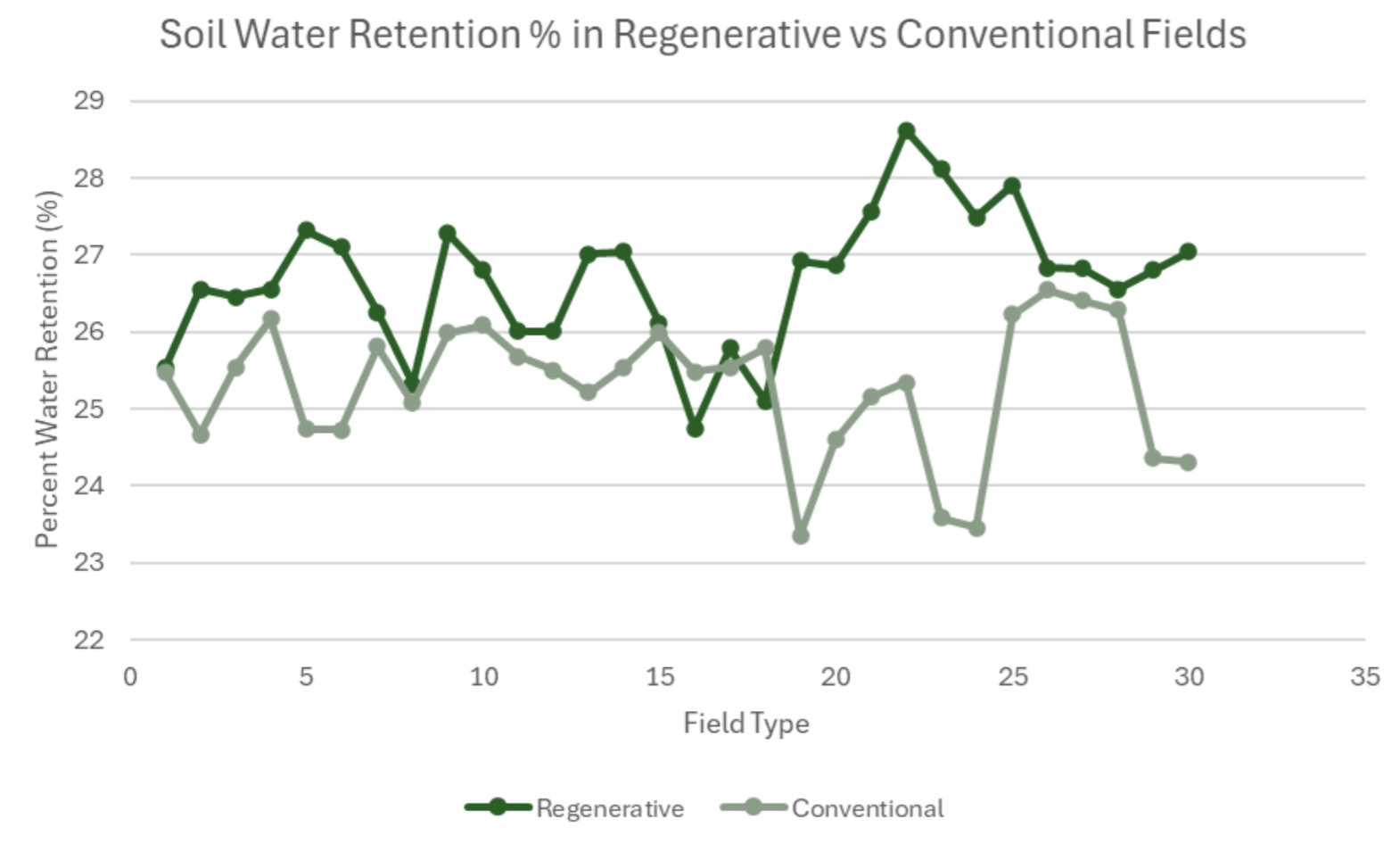
Figure 1. Comparison of water retention percentages from regenerative vs conventional fields at CSU Chico Farm, April, 2026. Scatterplot shows that soil from regenerative ag retained more water. n=60
Our findings support previous studies showing the benefits of using regenerative agriculture. So why doesn’t everyone use it? Making the switch can be expensive, and it can take anywhere from three to five years for the soil to recover enough to start showing improved results. So the next time you decide to buy produce from a farm that uses regenerative ag practices, know that you’re not just eating healthier food, you’re also sustaining a healthier world.
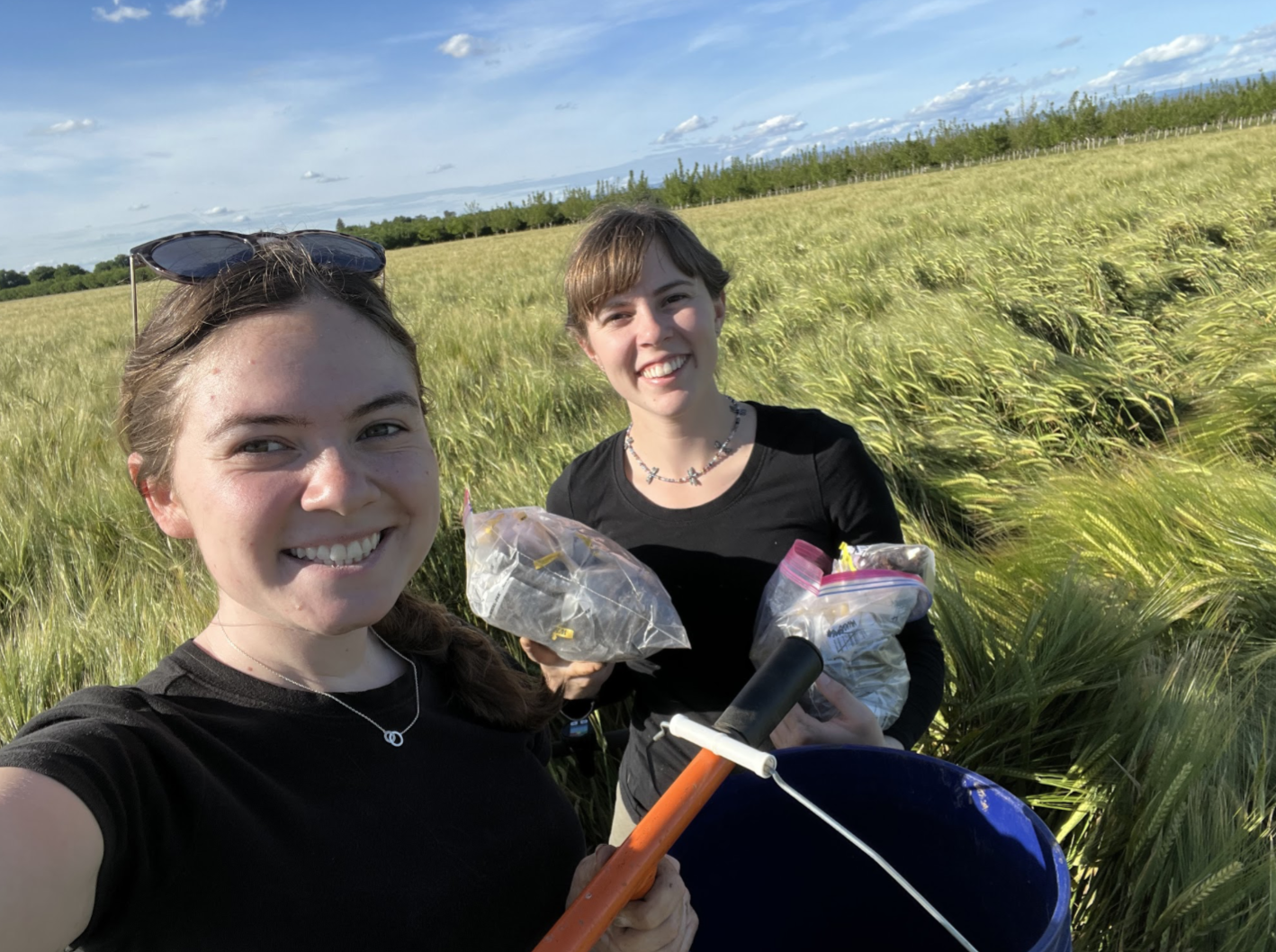
A big thank you to the Chico State Regenerative Ag team for all their help and support!